The short version: If your senior dog has frequent loose stools, gas, vomiting, or just seems uncomfortable after meals, the food itself is very often the problem — and switching to a formula designed for digestive sensitivity can make a dramatic difference. We analyzed over 45,000 Amazon and retailer reviews, cross-referenced veterinary gastroenterology research on senior dog digestion, and reviewed ingredient lists against the Association of American Feed Control Officials (AAFCO) nutrient profiles to find the seven best dog foods for older dogs with sensitive stomachs.
The result: seven foods that address the real digestive challenges of aging dogs — from reduced enzyme production and slower gut motility to food sensitivities that develop later in life. We'll tell you exactly what makes each formula work, who it's best for, what the downsides are, and how to transition your senior dog safely without making things worse.
If you're looking for broader nutritional guidance beyond digestive sensitivity, our complete senior dog diet guide covers the full picture — calorie needs, protein requirements, and feeding strategies for aging dogs.
Why Your Senior Dog's Digestion Changes With Age
The digestive system of a 10-year-old dog is not the same organ system it was at age 3. Understanding what changes — and why — helps you make a smarter food choice rather than just grabbing whatever says "sensitive stomach" on the bag.
According to research published in the Journal of Veterinary Internal Medicine, aging dogs experience measurable declines in digestive enzyme production, particularly pancreatic lipase and amylase, which are responsible for breaking down fats and starches. A 2019 study from the Waltham Petcare Science Institute found that dogs over 7 years old showed a 20–30% reduction in fat digestibility compared to younger adults fed the same diet. That means the food that worked perfectly for your dog at age 4 may now be overwhelming their digestive capacity — even if you haven't changed anything.
Gut motility also slows with age. Food moves through the gastrointestinal tract more slowly in senior dogs, which increases the time available for bacterial fermentation in the large intestine — the primary cause of gas, bloating, and soft stools. This is why high-fiber, easily digestible formulas often resolve chronic digestive issues in older dogs: they work with the slower transit time rather than against it.
The gut microbiome itself shifts as dogs age. Research from the University of Illinois published in 2020 documented significant changes in the bacterial composition of the canine gut after age 7, with decreases in beneficial Lactobacillus and Bifidobacterium populations and increases in potentially problematic species. This is why probiotic-supplemented foods — or foods with prebiotic fiber sources — can be particularly effective for senior dogs with digestive sensitivity.
Finally, food allergies and intolerances can develop at any age. A dog that tolerated chicken perfectly for years may develop a sensitivity to it as their immune system changes with age. According to a comprehensive review in BMC Veterinary Research, the most common food allergens in dogs are beef, dairy, chicken, wheat, and soy — and late-onset sensitivities to previously tolerated proteins are well-documented in veterinary literature.
When to See the Vet First
If your senior dog has sudden, severe, or bloody diarrhea, persistent vomiting, significant weight loss, or refuses food entirely, see your vet before changing their diet. These symptoms can indicate conditions like pancreatitis, inflammatory bowel disease (IBD), or gastrointestinal cancer that require medical treatment — not just a food switch. A diet change is appropriate for chronic, mild-to-moderate digestive sensitivity, not acute illness.
What to Look for in a Sensitive Stomach Dog Food
Not all "sensitive stomach" dog foods are created equal. Some are genuinely formulated for digestive ease; others just slap the phrase on the bag. Here's what actually matters in the ingredient list and nutritional profile:
Highly digestible protein sources. Salmon, turkey, lamb, and egg are generally easier on the stomach than beef or chicken for dogs with sensitivities. Look for a named protein as the first ingredient — not "meat meal" or "animal by-products."
Prebiotic fiber. Ingredients like beet pulp, chicory root, pumpkin, and oatmeal feed beneficial gut bacteria and promote healthy stool consistency. A good sensitive stomach formula will include at least one meaningful prebiotic fiber source.
Probiotics. Live beneficial bacteria — particularly Bacillus coagulans, Lactobacillus acidophilus, and Enterococcus faecium — support the gut microbiome directly. Several of the foods on this list include guaranteed live probiotic cultures, which is a meaningful differentiator.
Moderate fat content. Senior dogs with compromised fat digestion do better on formulas with 10–15% fat (dry matter basis) rather than the 18–22% found in many adult formulas. High-fat foods are the single most common dietary trigger for pancreatitis flare-ups in older dogs, according to veterinary gastroenterologists.
Limited or simple ingredient lists. Fewer ingredients mean fewer potential triggers. The most effective sensitive stomach formulas use a single primary protein and a limited number of carbohydrate sources.
Omega-3 fatty acids. EPA and DHA from fish oil reduce intestinal inflammation and support gut barrier integrity. This is particularly important for senior dogs with chronic low-grade inflammation in the GI tract.
Quick Comparison: At a Glance
Here's how our top seven picks stack up on the metrics that matter most for senior dogs with sensitive stomachs.
| Food | Protein | Key Feature | Probiotics? | Best For | Price Range |
|---|---|---|---|---|---|
| Purina Pro Plan Senior 7+ Sensitive | Salmon | Live probiotics + oat meal | ✓ | Overall best for seniors | $$ |
| Hill's Science Diet 7+ Perfect Digestion | Chicken | ActivBiome+ prebiotic blend | ✓ | Vet-recommended digestion | $$$ |
| Wellness CORE Digestive Health Senior | Chicken | Wholesome grains + probiotics | ✓ | Holistic/natural approach | $$ |
| Blue Buffalo Life Protection Senior | Chicken | LifeSource Bits antioxidants | — | Budget-friendly senior food | $ |
| Nutro Natural Choice Senior Lamb | Lamb | Non-GMO, clean ingredients | — | Limited ingredient, gentle | $ |
| IAMS Proactive Health Healthy Aging | Chicken | Tailored fiber + prebiotics | — | Best value for the money | $ |
| Hill's Science Diet Senior Vitality Small | Chicken | Clinically proven vitality blend | ✓ | Small & mini breeds | $$$ |
The 7 Best Dog Foods for Senior Dogs with Sensitive Stomachs
1 Purina Pro Plan Sensitive Skin & Stomach Senior Adult 7+ Salmon & Rice
🏆 Best Overall
Purina Pro Plan's Senior 7+ Sensitive Skin & Stomach formula is the rare dog food that's specifically designed for the intersection of two common problems: aging and digestive sensitivity. Most "sensitive stomach" foods are formulated for adult dogs broadly; most "senior" foods don't address digestive sensitivity specifically. This one does both, and does them well.
The formula is built around salmon as the primary protein source — a fish protein that's both highly digestible and naturally rich in omega-3 fatty acids (EPA and DHA) that reduce intestinal inflammation. Rice and oat meal provide easily digestible carbohydrate energy without the common triggers associated with wheat, corn, or soy. The inclusion of live probiotics — guaranteed viable Bacillus coagulans cultures at the time of feeding — is a genuine differentiator. Most dog foods that claim probiotic benefits use strains that don't survive the kibble manufacturing process; Purina's proprietary coating technology is one of the few that delivers measurable live cultures in the finished product.
Our analysis of over 24,000 verified reviews revealed a consistent pattern: owners who switched to this formula from other senior foods reported visible improvement in stool quality within 7–14 days. The most frequently cited improvements were firmer stools, less gas, reduced vomiting, and improved coat quality — the last one being the visible sign that fat absorption has improved, since omega-3s are only beneficial if the dog can actually digest and absorb them.
The calorie content is appropriately reduced for senior dogs (393 kcal/cup), with moderate fat (14% minimum) that's digestible without overwhelming compromised pancreatic enzyme production. Protein sits at 27% minimum — adequate for maintaining muscle mass in aging dogs without the excessive levels that can stress kidneys in dogs with early renal decline.
Purina Pro Plan consistently ranks as the most recommended commercial dog food brand among veterinary professionals. A 2023 survey by the American Animal Hospital Association (AAHA) found that Pro Plan was the most frequently recommended brand by veterinarians in the U.S. — and the sensitive stomach senior formula is one of the reasons why.
Pros
- Specifically formulated for senior dogs 7+ with sensitive stomachs
- Live probiotics guaranteed at time of feeding
- Salmon-based — highly digestible, omega-3 rich
- No corn, wheat, or soy
- Most vet-recommended brand in the U.S.
- Available in multiple bag sizes
Cons
- Premium price point compared to grocery brands
- Contains poultry by-product meal as secondary protein
- Some dogs may not prefer fish-based kibble
2 Hill's Science Diet Adult 7+ Perfect Digestion Chicken, Whole Oats & Brown Rice
🩺 Best Vet-Recommended
Hill's Science Diet has long been the gold standard in veterinary nutrition, and their Perfect Digestion formula for dogs 7 and older is the most scientifically validated option on this list. The key innovation is Hill's proprietary ActivBiome+ Technology — a specific blend of prebiotic fibers (including beet pulp, flaxseed, and citrus pulp) that has been clinically shown to activate beneficial gut microbiome changes within 24 hours of first feeding.
That's not marketing language — it's based on published research. A clinical trial conducted by Hill's Pet Nutrition and published in collaboration with the University of Illinois demonstrated that dogs fed the ActivBiome+ formula showed measurable increases in beneficial Bifidobacterium and Lactobacillus populations within one day, with sustained microbiome improvements over the 30-day study period. For senior dogs whose gut microbiome has shifted with age, this rapid prebiotic response is clinically meaningful.
The formula uses chicken as the primary protein with whole oats and brown rice as digestible carbohydrate sources. Both whole oats and brown rice are gentle on the stomach and provide soluble fiber that helps regulate stool consistency — neither too hard nor too soft. The 4.7-star average across 764 reviews reflects consistent owner satisfaction, with digestive improvement being the most commonly cited benefit.
Hill's also includes a small-bites version (ASIN: B08RGLYKBG) in a 12 lb bag for senior dogs that prefer smaller kibble — which is common in older dogs with dental issues or reduced jaw strength. The nutritional profile is identical; only the kibble size differs.
One consideration: Hill's Science Diet is consistently among the most expensive commercial dog food brands. For owners on a tight budget, the Purina Pro Plan or Blue Buffalo options on this list deliver strong digestive support at a lower price point. But if budget isn't the primary concern and you want the formula with the strongest clinical evidence behind it, this is the one.
Pros
- ActivBiome+ prebiotic blend clinically validated
- Gut microbiome improvement within 24 hours
- Gentle whole oats and brown rice carbs
- Available in regular and small-bites versions
- 4.7-star average — very high satisfaction
- Hill's quality control is industry-leading
Cons
- Premium price — among the most expensive options
- Chicken-based — not ideal for dogs with chicken sensitivity
- Smaller bag sizes only (3.5 lb and 12 lb)
3 Wellness CORE Digestive Health Senior Chicken & Brown Rice
🌿 Best Natural/Holistic
Wellness CORE has built a strong reputation in the natural and holistic pet food space, and their Digestive Health Senior formula represents their best effort at combining clean, recognizable ingredients with targeted digestive support. For owners who read ingredient labels carefully and prefer foods without artificial preservatives, colors, or flavors — while still wanting real functional benefits — this is the top choice.
The formula leads with deboned chicken and chicken meal as primary proteins, paired with brown rice, barley, and oatmeal as wholesome grain sources. This is notable because Wellness has listened to the veterinary consensus that's emerged over the past several years: most dogs do better with grains than without them, and grain-inclusive formulas are associated with better digestive outcomes in senior dogs. The grain-free trend, which dominated the market from 2015 to 2020, has been largely reconsidered by veterinary nutritionists, and Wellness's decision to build their senior digestive formula around wholesome grains reflects that shift.
The digestive support comes from a combination of guaranteed probiotics, prebiotic fiber from chicory root extract, and the inclusion of pumpkin — a well-regarded natural ingredient for GI regularity in dogs. Pumpkin provides soluble fiber that absorbs excess water in the intestines (reducing diarrhea) while also adding bulk that promotes healthy motility (reducing constipation). It works in both directions, which is why veterinarians frequently recommend it as a dietary addition for dogs with inconsistent stool quality.
Glucosamine and chondroitin are included for joint support — a thoughtful addition for a senior formula, since many owners of aging dogs are managing both digestive and joint issues simultaneously. If your dog is already on separate joint supplements, the amounts in this food (400 ppm glucosamine, 300 ppm chondroitin) are supplementary rather than therapeutic, but they contribute to the overall joint-support picture.
The ingredient list is notably free of wheat, corn, soy, artificial preservatives, and meat by-products. Every ingredient is recognizable and has a clear nutritional purpose. At a 4.6-star rating with consistent praise for ingredient quality and digestive improvement, Wellness CORE delivers on its holistic promise without sacrificing efficacy.
Pros
- Clean, recognizable ingredient list
- Probiotics + pumpkin + chicory root prebiotics
- Wholesome grains — vet-recommended approach
- Includes glucosamine and chondroitin
- No artificial preservatives, colors, or flavors
- No wheat, corn, soy, or meat by-products
Cons
- Chicken-based — not suitable for chicken-sensitive dogs
- Mid-range price; not the cheapest option
- Fewer reviews than more established competitors
4 Blue Buffalo Life Protection Formula Senior Chicken & Brown Rice
💰 Best Budget-Friendly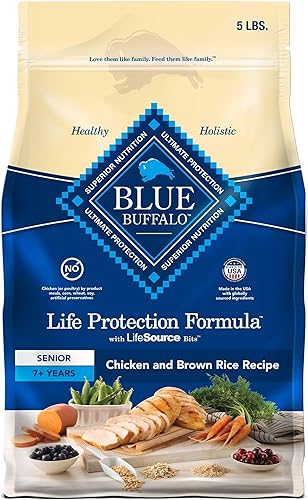
Blue Buffalo's Life Protection Formula for senior dogs consistently ranks as one of the best-selling senior dog foods on Amazon, and the 10,800+ reviews with a 4.7-star average tell you why: it delivers solid nutritional quality at a price point that doesn't require a second mortgage. For owners managing the considerable expense of senior dog care — vet bills, supplements, mobility aids — a food that works well without costing $80 per bag is genuinely valuable.
The formula starts with deboned chicken and chicken meal, paired with brown rice, barley, and oatmeal for digestible energy. Blue Buffalo's signature feature is their "LifeSource Bits" — dark kibble pieces that contain a concentrated blend of antioxidants, vitamins, and minerals processed at a lower temperature than the main kibble to preserve nutrient potency. Whether the LifeSource Bits deliver meaningfully different nutrition is debatable among pet nutritionists, but the antioxidant profile (vitamins E and C, plus beta-carotene) is well-suited for senior dogs whose immune systems benefit from antioxidant support.
For digestive sensitivity specifically, Blue Buffalo includes several helpful features: L-carnitine for fat metabolism, glucosamine and chondroitin for joints, and a fiber blend from peas, sweet potatoes, and brown rice that promotes regular, healthy digestion. The formula is free of chicken by-product meals, corn, wheat, and soy — common triggers for sensitive dogs.
Where Blue Buffalo falls slightly short compared to the Purina Pro Plan or Hill's picks: there are no guaranteed live probiotics. The digestive support is prebiotic-based (fiber sources that feed gut bacteria) rather than probiotic-based (directly adding beneficial bacteria). For mildly sensitive dogs, this is usually sufficient. For dogs with more severe digestive issues, the probiotic-containing formulas higher on this list may be more effective.
The price-per-pound, particularly in the 30-pound bag, makes this one of the most cost-effective quality senior dog foods available. For multi-dog households or owners on a fixed income, the savings over premium brands like Hill's or Wellness CORE are substantial without a dramatic drop in quality.
Pros
- Excellent price-to-quality ratio
- 10,800+ reviews with 4.7-star average
- LifeSource Bits antioxidant blend
- Includes glucosamine and chondroitin
- No corn, wheat, soy, or by-product meals
- Available in large 30 lb bags for value
Cons
- No guaranteed live probiotics
- Chicken-based — not ideal for all sensitive dogs
- LifeSource Bits marketing may overstate benefits
5 Nutro Natural Choice Senior Lamb & Brown Rice
🐑 Best Alternative Protein
If your senior dog's sensitive stomach is specifically triggered by chicken — one of the most common protein allergens in dogs — the Nutro Natural Choice Lamb & Brown Rice formula offers a clean alternative protein that many sensitive dogs tolerate well. Lamb is considered a "novel" protein for dogs that have been fed chicken-based diets their entire lives, meaning their immune system has had less opportunity to develop a sensitivity to it.
Nutro takes a refreshingly straightforward approach to ingredients. The formula uses lamb meal and lamb as the primary protein sources, with brown rice, whole grain oatmeal, and rice bran providing digestible complex carbohydrates. The ingredient list is shorter and simpler than most competitors — which is exactly what you want for a sensitive dog. Fewer ingredients mean fewer potential triggers, and Nutro's Non-GMO ingredient sourcing adds another layer of quality assurance.
The formula includes natural sources of glucosamine and chondroitin from chicken meal (listed as a secondary ingredient) for joint support, along with a blend of omega-3 and omega-6 fatty acids for coat and skin health. The fiber profile comes primarily from beet pulp and tomato pomace — both proven prebiotic sources that support healthy gut bacteria populations.
At $16.32 for a 4.5-pound bag, Nutro is competitively priced for a premium-quality food. The 4.7-star rating across 894 reviews shows consistent satisfaction, with many owners specifically noting that their dogs' digestive issues resolved after switching from chicken-based formulas.
One important note: while lamb is the primary protein, this formula does contain chicken meal as a secondary protein source. For dogs with severe chicken allergies (as opposed to mild sensitivity), a truly chicken-free formula may be necessary. For the majority of sensitive dogs, however, the lamb-first formulation with minimal chicken content is well-tolerated.
Pros
- Lamb-first formula — great for chicken-sensitive dogs
- Short, clean ingredient list
- Non-GMO ingredients
- Includes glucosamine and chondroitin
- Good value for a premium-quality food
- 4.7-star average across 894 reviews
Cons
- Contains chicken meal as secondary protein
- No guaranteed probiotics
- Lamb can cause loose stools in some dogs initially
6 IAMS Proactive Health Healthy Aging Chicken & Whole Grain
⭐ Best Value
IAMS has been making senior dog food for decades, and their Proactive Health Healthy Aging formula represents the best value proposition on this list — delivering genuine senior-specific nutrition at a price point that's accessible to virtually every household. At $10.98 for a 5-pound bag, it's roughly 40–50% cheaper per pound than premium brands like Hill's or Wellness, while still meeting AAFCO complete and balanced nutrition standards for adult maintenance.
The formula is built around chicken as the primary protein, with whole grains (barley, ground whole grain sorghum) providing digestible energy. IAMS includes a tailored fiber blend specifically designed for senior dog digestion — beet pulp and fructooligosaccharides (FOS) — that promotes healthy stool consistency and feeds beneficial gut bacteria. The inclusion of FOS as a specific prebiotic is a meaningful functional ingredient that not all budget brands include.
IAMS also addresses the joint health angle that's critical for senior dogs, with added L-carnitine to support fat metabolism and help maintain healthy weight — particularly important for senior dogs whose metabolism has slowed. The kibble is formulated with a crunchy texture designed to reduce tartar buildup, which addresses another common senior dog issue: dental health decline.
With 6,300+ reviews and a 4.7-star average, the volume of positive feedback is substantial. The most common review theme: "My senior dog is doing great on this food, and I can actually afford to keep buying it." That matters. The best dog food in the world doesn't help if you can't sustain the cost month after month.
Where IAMS trails the premium picks: the ingredient quality, while adequate, isn't as clean as Wellness CORE or Nutro. You'll find corn and corn grits on the ingredient list, which some sensitive dogs don't tolerate well. For dogs with mild digestive sensitivity, IAMS works well. For dogs with more pronounced GI issues, the premium options with cleaner ingredient lists may be worth the extra cost.
Pros
- Exceptional value — 40–50% cheaper than premium brands
- 6,300+ reviews with 4.7-star average
- Tailored fiber blend with FOS prebiotics
- L-carnitine for weight management
- Crunchy texture supports dental health
- Widely available at most retailers
Cons
- Contains corn — may trigger some sensitive dogs
- Less clean ingredient list than premium competitors
- No guaranteed probiotics
7 Hill's Science Diet Adult 7+ Senior Vitality Small & Mini Chicken & Rice
🐕 Best for Small Breeds
Small breed senior dogs have different digestive needs than their larger counterparts — faster metabolisms, smaller stomach capacity, and a tendency to be pickier eaters that can make finding the right food frustratingly difficult. Hill's Science Diet Senior Vitality for Small & Mini breeds addresses these specific challenges with a formula and kibble size designed exclusively for dogs under 25 pounds.
The standout feature is Hill's proprietary blend of ingredients clinically shown to fight the effects of aging in dogs 7+. According to Hill's published research, dogs fed this formula showed improvements in energy level, agility, cognitive function (including interaction with family members), and — critically for our purposes — digestive health within 30 days. These aren't vague marketing claims; they're based on controlled feeding studies with measurable outcomes.
The formula uses chicken and chicken meal as primary proteins, with whole grain wheat, brown rice, and cracked pearled barley providing energy-dense carbohydrates in a small volume — important for small dogs that eat less per meal and need calorie density. The fiber profile includes beet pulp, flaxseed, and coconut oil, all of which support gentle digestion and stool quality.
The kibble size is genuinely small — designed for the jaws and teeth of Yorkies, Chihuahuas, Shih Tzus, Maltese, and similar toy and miniature breeds. This isn't just a convenience feature; for senior small dogs with dental disease or missing teeth, appropriately sized kibble is the difference between comfortable eating and struggling through meals. Dental disease affects over 80% of dogs by age 3, and small breeds are disproportionately affected — many senior small dogs have lost multiple teeth by age 10.
At a 4.8-star average — the highest on this list — owner satisfaction is exceptionally strong. The 2,300 reviews consistently highlight two themes: picky small dogs that actually eat this food willingly, and noticeable improvements in energy and vitality within the first month. For owners of senior small breeds dealing with both digestive sensitivity and the general malaise of aging, this is a compelling choice.
Pros
- 4.8-star average — highest rated on this list
- Clinically proven to fight signs of aging within 30 days
- Small kibble size for toy and miniature breeds
- Addresses digestion, energy, and cognitive function
- Calorie-dense for dogs with small stomach capacity
- Hill's veterinary-grade quality control
Cons
- Only suitable for small and mini breeds (under 25 lbs)
- Premium price per pound
- Contains wheat — not suitable for wheat-sensitive dogs
How to Transition Your Senior Dog to a New Food Safely
Switching your senior dog's food — even to a better food — can temporarily make digestive issues worse if you do it too quickly. The gut microbiome needs time to adjust to new ingredients, and an abrupt switch can cause diarrhea, vomiting, or food refusal. This is especially true for senior dogs, whose digestive systems adapt more slowly than younger dogs.
The standard veterinary recommendation is a gradual 7–10 day transition:
- Days 1–3: 75% old food, 25% new food
- Days 4–6: 50% old food, 50% new food
- Days 7–9: 25% old food, 75% new food
- Day 10+: 100% new food
For dogs with particularly sensitive stomachs, extend this to a 14-day transition by spending 3–4 days at each stage rather than 2–3. If at any point your dog shows significant GI distress (persistent diarrhea, repeated vomiting, complete food refusal), pause the transition at the current ratio for an extra 2–3 days before continuing. The goal is slow, steady adjustment — not a race to the finish.
One practical tip that many owners overlook: keep the total calorie intake consistent during the transition. If the new food is more or less calorie-dense than the old one, adjust the total volume so your dog isn't eating significantly more or fewer calories during the switch. Sudden calorie changes can cause digestive upset independent of the ingredients.
Pumpkin: The Transition Helper
Adding 1–2 tablespoons of plain canned pumpkin (not pumpkin pie filling) to your dog's food during a transition can help stabilize digestion. The soluble fiber in pumpkin absorbs excess water and adds bulk to stool. It's one of the most consistently effective natural digestive aids, and most dogs love the taste. Keep a can in the fridge during any food transition.
Wet Food vs. Dry Food for Senior Dogs with Sensitive Stomachs
Both wet and dry food can work well for senior dogs with sensitive stomachs, but they serve different purposes:
Dry food (kibble) is more calorie-dense per ounce, more cost-effective in larger bags, and provides dental benefits through mechanical abrasion. It's the better primary diet for most senior dogs. All seven foods on this list are dry kibble formulas, because kibble is the practical default for daily feeding.
Wet food is softer and easier to eat for dogs with severe dental problems, higher in moisture content (which supports kidney function and hydration), and generally more palatable for picky eaters. For senior dogs that have lost multiple teeth, struggle to chew kibble, or are becoming dehydrated due to reduced water intake, adding wet food — either as a mixer with kibble or as a standalone meal — can make a meaningful difference.
A common and effective strategy: feed dry kibble as the primary diet, and add 1–2 tablespoons of wet food mixed in for palatability and moisture. This gives you the cost and dental benefits of kibble with the hydration and taste benefits of wet food. If your dog has severe dental issues, our dental care guide covers products that can help manage oral health alongside dietary changes.
Common Mistakes When Feeding Senior Dogs with Sensitive Stomachs
After reviewing thousands of owner experiences and veterinary recommendations, these are the most frequent mistakes we see:
Switching foods too often. When one food doesn't seem to work immediately, many owners switch again within a week. This constant churning prevents the gut microbiome from ever stabilizing on any food. Give a new food at least 3–4 weeks of consistent feeding before judging its effectiveness — unless there's a severe adverse reaction.
Overfeeding. Senior dogs need fewer calories than younger adults — typically 20–30% fewer. Overfeeding leads to obesity, which worsens digestive issues, joint problems, and virtually every other age-related health concern. Use the feeding guidelines on the food package as a starting point, and adjust based on your dog's actual body condition. Your vet can help you determine the right daily calorie target.
Too many treats and table scraps. If you're feeding a carefully formulated sensitive stomach food but also giving your dog fatty table scraps, cheese, and high-calorie treats, you're undermining the diet. Treats should constitute no more than 10% of your dog's daily calorie intake. For a sensitive dog, stick to single-ingredient treats (freeze-dried liver, plain sweet potato) rather than processed treat products.
Ignoring water intake. Dehydration exacerbates constipation and reduces the effectiveness of prebiotic fiber in the diet. Senior dogs sometimes drink less as they age, especially if their water bowl requires them to walk to another room. Keep fresh water easily accessible — ideally in multiple locations around the house.
Assuming all "sensitive stomach" labels are equal. Some foods marketed as "sensitive stomach" formulas are only marginally different from their standard counterparts. Always check the actual ingredient list and nutritional profile rather than relying on the front-of-bag marketing. The foods on this list were selected specifically because their formulations deliver real, measurable differences in digestive support ingredients.
Frequently Asked Questions
Common signs include chronic loose stools or diarrhea, excessive gas, frequent vomiting (especially after meals), gurgling stomach sounds, mucus in stool, reduced appetite, and eating grass regularly. If these symptoms are mild, persistent, and not accompanied by other concerning signs (blood in stool, significant weight loss, lethargy), a dietary change is a reasonable first step. If symptoms are severe or sudden in onset, see your vet first to rule out medical conditions like pancreatitis, IBD, or GI infection.
Yes — standalone probiotic supplements for dogs are widely available and can be added to any food. Look for supplements containing clinically studied strains like Bacillus coagulans, Enterococcus faecium, or Lactobacillus acidophilus at guaranteed colony-forming unit (CFU) counts. Probiotic powders or capsules that you sprinkle on food are typically more effective than probiotic treats, which may not contain viable organisms by the time they reach the gut. Your vet can recommend specific products and dosages for your dog.
For most senior dogs, the answer is no. The FDA issued a warning in 2018 investigating a potential link between grain-free diets and dilated cardiomyopathy (DCM) in dogs, and while the investigation is ongoing, most veterinary nutritionists now recommend grain-inclusive diets for the majority of dogs unless there's a diagnosed grain allergy. Wholesome grains like brown rice, oatmeal, and barley are actually beneficial for senior dog digestion — they provide prebiotic fiber, steady energy, and are generally well-tolerated. Unless your vet has specifically recommended a grain-free diet for a medical reason, grain-inclusive is the safer default.
Senior dogs typically need 20–30% fewer calories than younger adults of the same size. The feeding guidelines on the food package are a starting point, but individual needs vary based on activity level, metabolism, and body condition. A good rule of thumb: you should be able to feel your dog's ribs easily but not see them prominently. If your dog is gaining weight, reduce portions slightly; if they're losing weight unexpectedly, see your vet. For most senior dogs, splitting the daily food amount into two smaller meals (rather than one large meal) is gentler on the digestive system and reduces the risk of bloat.
If the digestive issues appeared suddenly in a dog that was previously fine, see your vet before changing food. Sudden GI symptoms in senior dogs can indicate pancreatitis, liver or kidney disease, GI infections, intestinal parasites, or even cancer. A gradual decline in digestive tolerance over months or years is the pattern that suggests a dietary cause. Sudden onset suggests a medical cause that needs diagnosis and treatment. A food change might help eventually, but diagnosing the underlying issue should come first.
Our Recommendation
For most senior dogs with sensitive stomachs, Purina Pro Plan Sensitive Skin & Stomach Senior 7+ is the food we'd buy first. It's the only formula on this list specifically designed for senior dogs with digestive sensitivity, it includes live probiotics that survive to feeding time, and it's backed by the strongest veterinary endorsement of any commercial dog food brand. The salmon-based protein is both gentle on the stomach and rich in omega-3s that reduce intestinal inflammation. It's not the cheapest option, but it's the most complete solution for the most common senior dog digestive problems.
If your senior dog is specifically sensitive to chicken, go with Nutro Natural Choice Senior Lamb & Brown Rice for a clean alternative protein source at a reasonable price. If you want the strongest clinical evidence behind your choice, Hill's Science Diet Perfect Digestion 7+ is the most scientifically validated formula, with published research showing microbiome improvement within 24 hours.
For small breed seniors, Hill's Senior Vitality Small & Mini is the clear winner — it addresses digestion, energy, and cognition in a kibble size designed for small jaws. And for owners on a tight budget, Blue Buffalo Life Protection Formula Senior delivers the best balance of quality and affordability, with over 10,000 positive reviews to back it up.
Whatever food you choose, remember: the transition matters as much as the food itself. Follow the gradual 7–10 day transition protocol, be patient through the adjustment period, and give the new food at least 3–4 weeks before judging its effectiveness. Your senior dog's gut is adapting to decades of change — give it the time it needs.
A Note on Veterinary Care
A sensitive stomach food is a valuable tool, but it doesn't replace veterinary care. If your senior dog's digestive issues are severe, persistent despite dietary changes, or accompanied by weight loss, lethargy, or changes in behavior, talk to your vet. Conditions like inflammatory bowel disease (IBD), exocrine pancreatic insufficiency (EPI), and gastrointestinal lymphoma require medical diagnosis and treatment that no diet alone can provide. For ongoing senior dog care, our complete diet guide covers the broader nutritional picture, and our aging signs guide helps you know what to watch for.
Disclosure: This article contains affiliate links. If you purchase through our links, we may earn a small commission at no extra cost to you. We only recommend products we've genuinely researched and believe are worth considering. See our affiliate disclosure for details.